ERP for the healthcare and care industry

For continuous traceability, efficient care processes and the highest quality of care.
Get free advice now!
ERP systems for the health and care sector: Efficient processes, reliable care and quality assurance
In the health and care sector, institutions are faced with the challenge of managing complex care-relevant processes efficiently, in compliance with the law and in a patient-oriented manner. From digital care documentation to deployment and duty planning to quality assurance, processes must be organized transparently, comprehensibly and reliably to ensure high-quality care. An ERP system for the healthcare sector acts as a central platform that consistently connects all relevant processes. It enables the digital recording and management of care services, patient data, medication plans, resources and work schedules, which significantly increases efficiency and transparency in everyday care. In addition, the system supports compliance with legal requirements, internal standards and quality guidelines and provides the basis for audits, documentation and reports. Real-time information on resources, care services and working hours enables precise planning, rapid response and well-founded decisions. The result is a structured, transparent and secure management of nursing processes, which not only improves the quality of care and patient safety, but also relieves employees and increases the efficiency of the facility. The following ERP functions for the health and care sector are particularly relevant for daily operations and form the basis for a reliable, comprehensible and legally compliant care organization.
Care instructions & action documentation
Precise, comprehensible and flexible care planning is crucial for optimally meeting patient needs, using resources efficiently and ensuring quality in everyday care. The ERP system enables the creation and distribution of individually adaptable care plans, intervention guidelines and daily schedules, which are tailored exactly to the respective institution, patient group or situation. All care instructions can be flexibly edited and can be controlled on a role-based basis, so that nurses, specialists and management level receive the information relevant to them. Changes to care plans, measures or daily routines can be implemented in real time and automatically distributed to all employees involved. The digital, central administration ensures that care processes are transparent, comprehensible and audit-proof. At the same time, work processes are standardized, duplication of work reduced and the quality of care is continuously improved. The result is efficient, flexible and legally compliant care planning, which both optimizes patient care and relieves employees and ensures compliance with internal standards and legal requirements.
Resident file & history documentation
A complete, structured patient record that can be accessed at any time is crucial for efficient care, secure treatment and traceability in healthcare. The ERP system provides a central digital file that brings together all relevant information about a patient or resident. This includes care history, medical instructions, diagnoses, contact persons, photos and history documentation. All data is directly linked to tasks, care plans, calendars and work schedules, so that nurses, doctors and management levels can view and react to the current status at any time. The digital file enables complete, audit-proof documentation, supports the traceability of measures and ensures that important information is available centrally and in a structured manner. Changes are automatically updated, which avoids duplication of work, reduces errors and significantly increases the quality of care. The result is transparent, efficient and secure patient and care documentation that both optimizes care and reliably meets compliance, quality standards and audit requirements.
Intelligent BI & alerting system
Proactive monitoring of care processes is critical to continuously ensure patient safety, quality of care, and compliance. The ERP system offers clear dashboards that make deviations visible in real time — for example in the case of vital signs, medication administration or gaps in documentation. Thanks to integrated early warning systems, critical situations are identified immediately so that nurses and management levels can react quickly. The automated escalation logic ensures that deviations are forwarded to the responsible persons in a targeted manner. Responsibilities, priorities and recommendations for action are clearly defined, which minimizes errors and increases supply security. The central presentation of all relevant data enables transparent tracking, better coordination and well-founded decisions in everyday care. At the same time, the consistency of processes is supported, response times are reduced and the quality of care is sustainably improved.
Mobile care documentation
Accurate, up-to-date, and easily accessible care documentation is critical to ensure quality of care, patient safety, and compliance in care. The ERP system enables the mobile recording of care reports, vital signs, measures and observations directly on the patient or in the area of use. The application is intuitive to use so that nurses can document quickly and without errors. Offline-compatible use is also possible — all data is automatically synchronized when connected, so that no information is lost and the documentation is always complete and audit-proof. The central recording of all relevant information creates transparency about care processes, measures and vital signs, which significantly facilitates care coordination and decision-making. At the same time, errors are reduced, duplication of work avoided and traceability to internal guidelines or legal requirements is ensured. The result is efficient, flexible and secure care documentation that relieves employees, increases the quality of care and ensures compliance in everyday care.

ERP taken to the next level – with AI

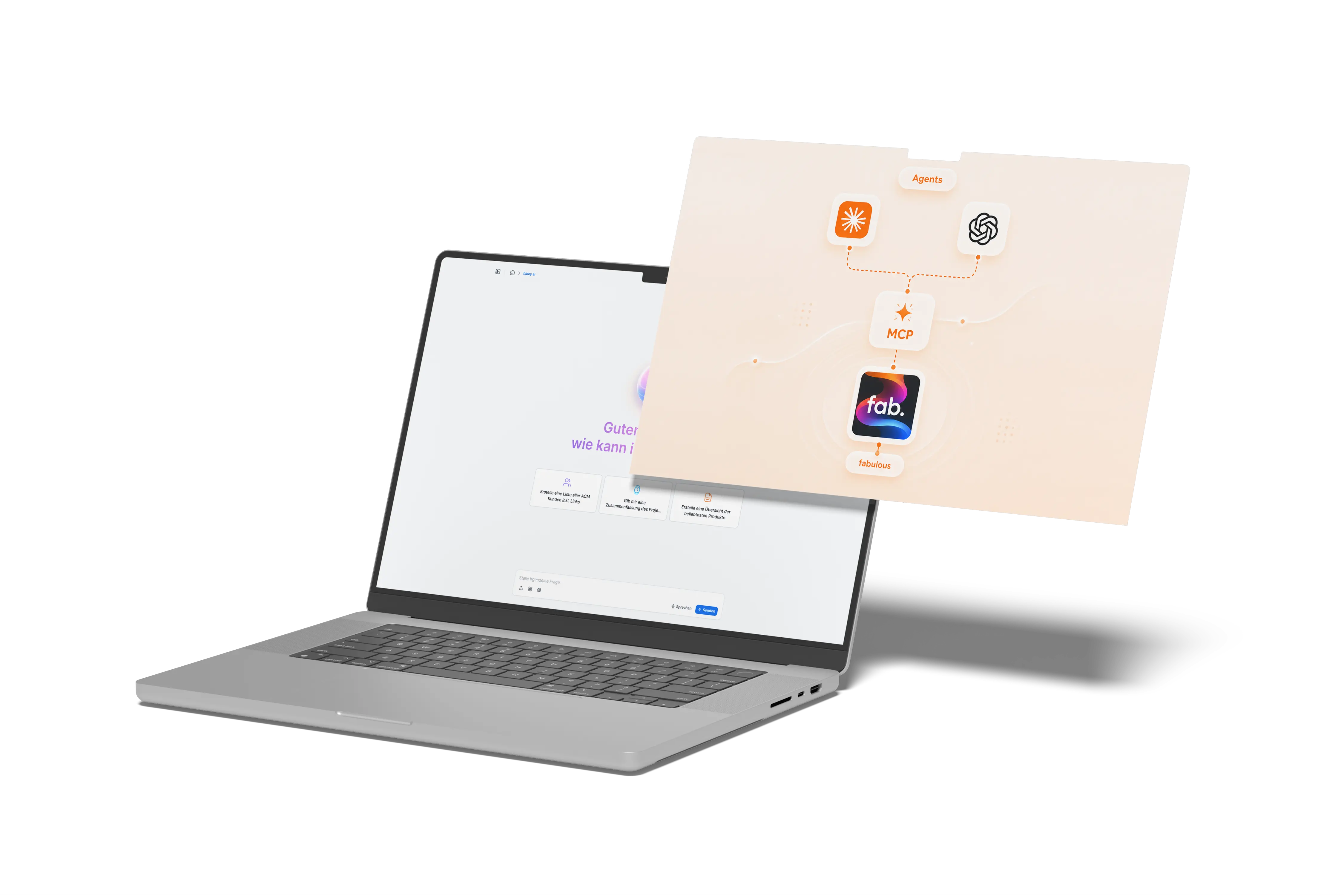
fabAI – Your AI for digital corporate knowledge, automation, and increased efficiency
Unleash your company's full potential with fabAI, the intelligent AI solution from fab4minds. fabAI digitizes your entire company knowledge, optimizes internal information processes, and creates the basis for a fully networked, automated working environment. AI-supported forecasts support demand-driven production and sales planning as well as optimized warehousing. At the same time, patterns and deviations in customer behavior are identified at an early stage. The integrated chatbot allows analyses, information, and actions to be used directly and efficiently in the ERP.
Learn more

Our solutions

Our specialized B2B solutions support you in your digital transformation, automate your core processes, and integrate industry-specific requirements—scalable, efficient, and future-proof.
FAQ

Do you have any questions? We have the answers

In our FAQ, we give you a quick and clear insight into the most important topics related to fabular — so that you can make informed decisions.

What is an ERP system for the health and care sector?

A ERP system for health and care facilities is a central software platform that integrates all care-relevant processes — from digital care documentation on deployment planning and care planningup to Quality assurance and reporting.

Why is an ERP system important in maintenance?

The system supports institutions in: comply with legal requirements, create transparency in everyday care And the To reliably ensure quality of supply. At the same time, it makes it easier Coordinate caregivers, resources, and patient information.

What functions does an ERP system cover in maintenance?

Typical features include: Care documentation, mobile data collection, care planning, intervention management, deployment planning, early warning systems, digital patient records, quality assurance and reporting.

How does an ERP system support maintenance documentation?

The system enables mobile, user-friendly recording of care reports, vital signs, measures and observations, even offline with automatic synchronization. All data is stored centrally, documented in an audit-proof manner and can be retrieved at any time.

How does care planning and intervention management work?

Care plans, intervention guidelines and daily schedules can be Create individually, edit flexibly and control on a role-based basis. Changes are automatically distributed to nursing staff so that measures always remain up-to-date and comprehensible.

What are the benefits of dashboards and early warning systems?

Dashboards visualize discrepancies in Vital signs, medication administration or documentation gaps in real time. Die automated escalation logic forwards deviations to the responsible persons, reduces response times and increases patient safety.

What does the digital patient record offer?

The central digital file combines Nursing history, medical orders, diagnoses, contact persons, photos and history documentation. She is with Linked tasks, care plans and calendars and ensures a transparent, audit-proof documentation of all care-relevant information.

Which institutions is an ERP system suitable for?

ERP systems are suitable for Nursing homes, outpatient care services, hospitals, rehabilitation facilities and health centers, regardless of size or specialization.

What are the advantages of an ERP system in daily care operations?

ERP systems ensure Transparency, efficiency, and compliance. They reduce errors, relieve nurses, improve Quality of supply and provide the basis for reliable planning, quality assurance and legally compliant documentation.

Personal advice is important to us!

Let's find out together how fabular makes your company more efficient.
Lassen Sie uns gemeinsam herausfinden, wie fabular Ihr Unternehmen effizienter macht.