ERP for the maintenance industry

For end-to-end traceability, efficient processes, and maximum operational reliability.
Get free advice now!
ERP systems for the maintenance industry: Focus on availability, safety, and efficiency
In the maintenance industry, plant availability, operational safety, and efficient processes are key success factors. Companies face the challenge of reliably planning maintenance work, inspections, repairs, and fault management while at the same time meeting extensive legal, normative, and documentary requirements. An ERP system for maintenance acts as a central control platform for seamlessly organizing and transparently mapping all relevant processes. It links maintenance planning, order management, spare parts logistics, personnel scheduling, and documentation in a single integrated system. This reduces downtime, shortens response times, and optimizes the use of resources. Through structured preventive and condition-based maintenance planning, complete traceability of measures, components, and inspections, as well as audit-proof documentation, an ERP system helps companies reliably comply with legally required evidence, safety regulations, and internal standards. At the same time, real-time data and transparent processes create the basis for informed decisions and continuous optimization of the maintenance strategy. The following ERP functions for the maintenance industry are essential for daily operations and form the basis for high plant availability, safe processes, and economical maintenance procedures.
Digital documentation & test reports
Complete and comprehensible documentation of maintenance and repair measures is essential for reliably complying with legal requirements, internal standards, and audit requirements. At the same time, it forms the basis for transparency, quality assurance, and continuous process optimization. The ERP system enables the automatic generation of maintenance logs, checklists, and reports that are directly linked to the respective work order, plant, or technical object. All relevant information—measures carried out, measured values, spare parts used, and times—is recorded in a structured manner and stored centrally. Direct assignment to the order and object creates a complete, audit-proof history of all maintenance activities. Documents can be accessed and evaluated at any time and used for internal evaluations, external audits, or legally required evidence. The result is efficient, consistent, and system-supported documentation that reduces administrative effort, increases the quality of maintenance, and creates maximum transparency throughout the entire life cycle of systems.
Reporting & Key Performance Indicator (KPI) Monitoring
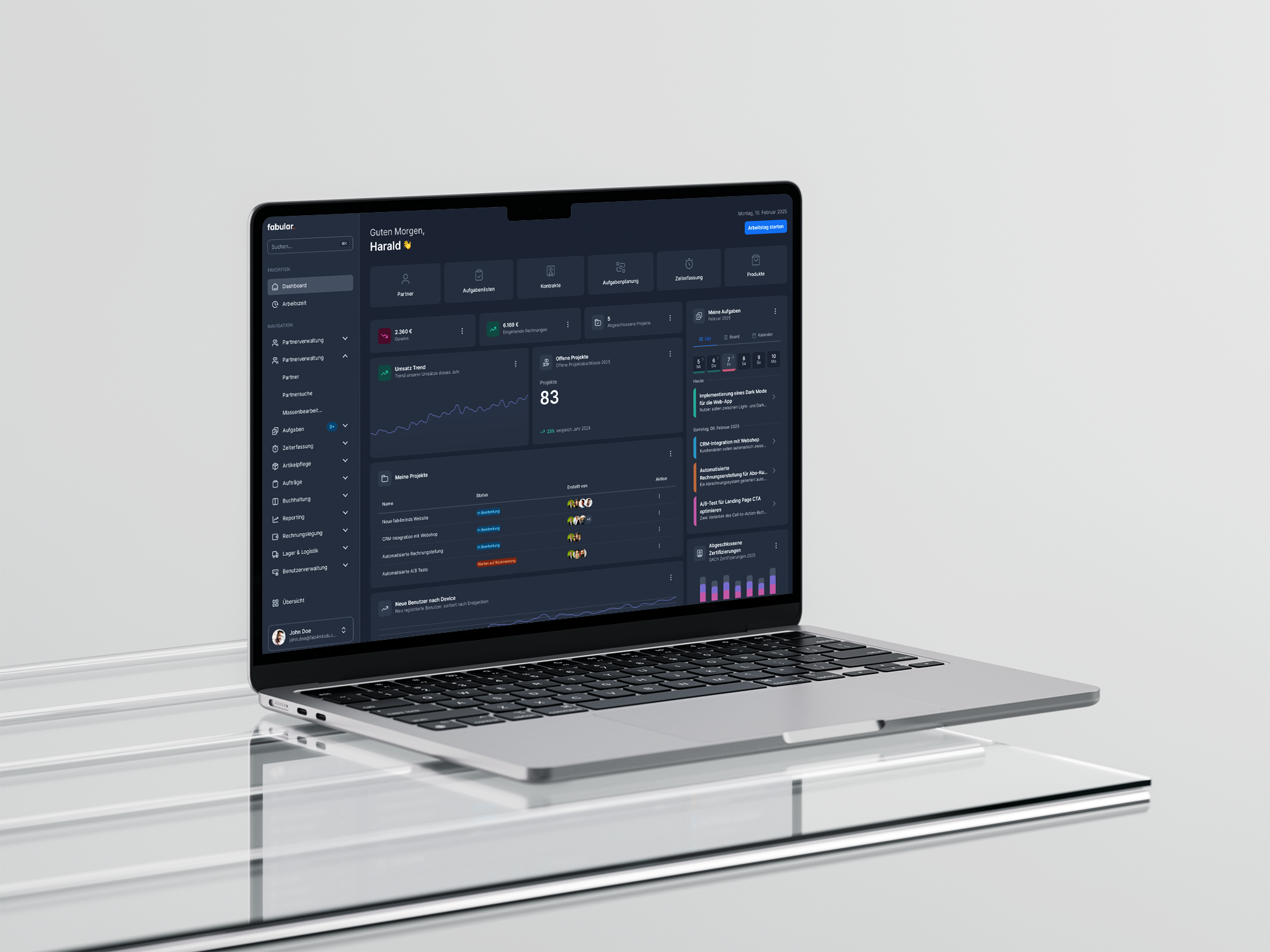
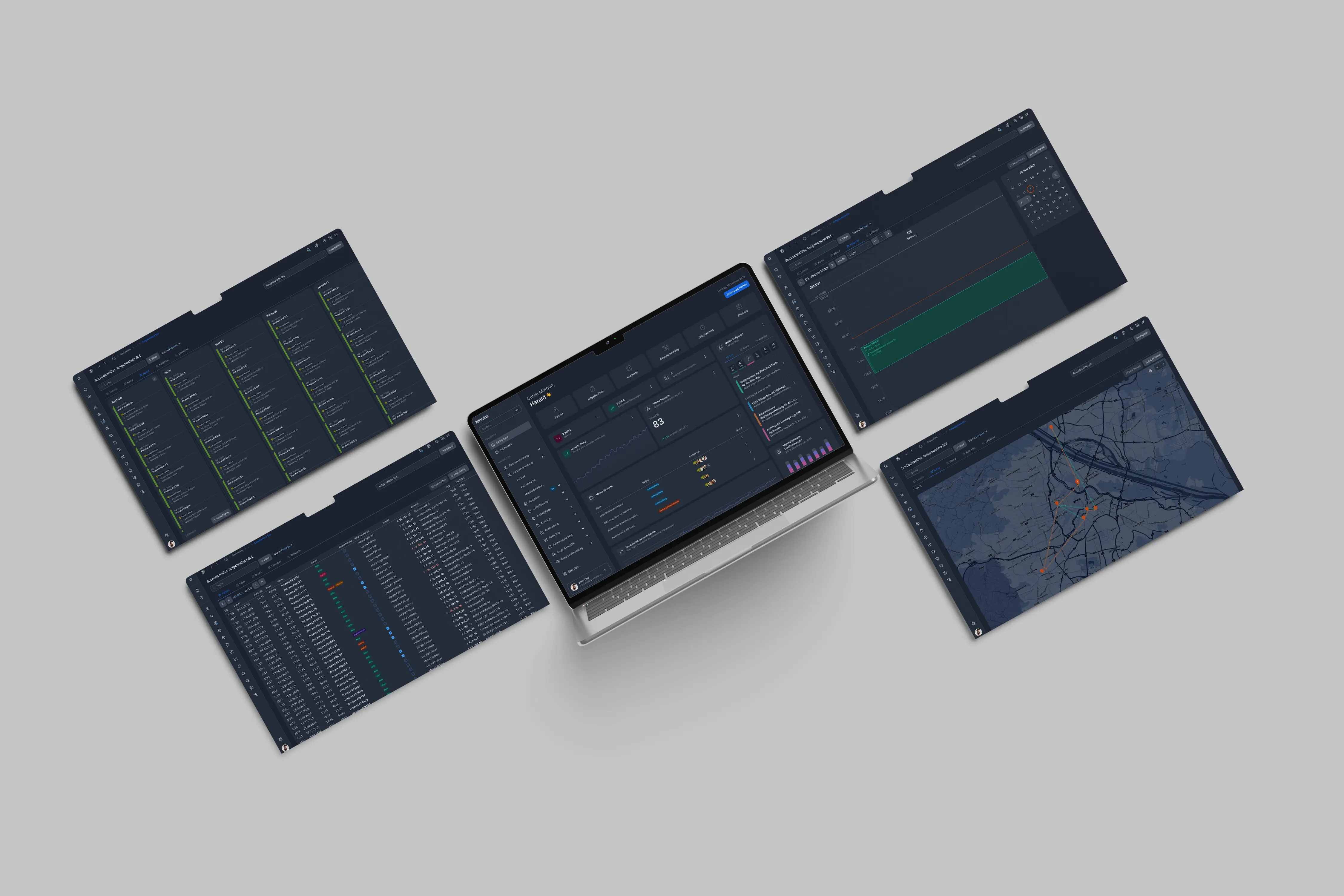
Effective control of maintenance processes is crucial for continuously improving plant availability, efficiency, and profitability. Only those who systematically record key figures such as MTBF (Mean Time Between Failures), MTTR (Mean Time To Repair), or deadline and inspection rates can identify weak points and optimize them in a targeted manner. The ERP system automatically records all relevant key performance indicators (KPIs) and links them directly to the respective orders, assets, and maintenance measures. Clear dashboards and visualizations enable companies to monitor the performance of their maintenance in real time, identify bottlenecks, and derive potential for improvement. The analysis makes it possible to optimize maintenance cycles, use resources efficiently, and avoid downtime at an early stage. At the same time, it creates the basis for informed decisions, strategic planning, and continuous optimization of the maintenance process. The result is transparent, data-driven control that increases maintenance productivity, reduces costs, and maximizes asset availability.
Competence & qualification management
The ERP system allows tasks to be automatically assigned according to employee qualifications. The system takes into account the skills, certificates, and current training records of employees. Automatic notifications provide timely information about missing qualifications or expiring training certificates, so that necessary training or approvals can be planned in advance. Direct integration into order and resource planning ensures that tasks are distributed efficiently, in compliance with regulations, and with optimal resource utilization. At the same time, this transparency increases the security, compliance, and traceability of all work steps. The result is structured, secure, and forward-looking personnel resource planning that not only improves the quality of maintenance but also minimizes training costs and reliably supports compliance with legal requirements.
Maintenance management
Structured and reliable maintenance and repair planning is crucial to ensuring long-term plant availability, operational safety, and cost-effectiveness. Unplanned downtime, forgotten inspection dates, or inconsistent processes quickly lead to increased costs and risks. With centralized planning and control of all maintenance and repair measures, the ERP system enables automated, repeatable, and clearly structured maintenance organization. Regular maintenance, legally required inspections, and individual maintenance cycles are planned and reliably monitored by the system. Automatic reminders and notifications ensure that all measures are carried out on time. At the same time, stored work instructions, checklists, and documentation requirements ensure that maintenance and repair work is always carried out to a consistently high standard and fully documented. The result is transparent processes, greater planning reliability, and traceable, audit-proof maintenance that reduces downtime and supports the long-term value retention of assets.

ERP taken to the next level – with AI

fabAI – Your AI for digital corporate knowledge, automation, and increased efficiency
Unleash your company's full potential with fabAI, the intelligent AI solution from fab4minds. fabAI digitizes your entire company knowledge, optimizes internal information processes, and creates the basis for a fully networked, automated working environment. AI-supported forecasts support demand-driven production and sales planning as well as optimized warehousing. At the same time, patterns and deviations in customer behavior are identified at an early stage. The integrated chatbot allows analyses, information, and actions to be used directly and efficiently in the ERP.
Learn more

Our solutions

Our specialized B2B solutions support you in your digital transformation, automate your core processes, and integrate industry-specific requirements—scalable, efficient, and future-proof.
FAQ

Do you have questions? We have the answers.

Our FAQ section provides you with a quick and clear overview of the most important topics relating to fabular—so that you can make an informed decision.

What is an ERP system for the maintenance industry?

An ERP system for the maintenance industry is a central software solution for planning, controlling, and documenting maintenance, inspection, repairs, and fault management. It combines technical and commercial processes in one integrated system.

Why is an ERP system important in maintenance?

An ERP system increases plant availability, reduces unplanned downtime, and ensures transparent, structured processes. At the same time, it supports compliance with legal requirements and enables the efficient use of personnel, materials, and time.

Which processes does an ERP system cover in maintenance?

An ERP system covers, among other things, maintenance and inspection planning, fault management, work orders, spare parts management, personnel scheduling, documentation, and reporting.

How does an ERP system support maintenance planning?

ERP systems enable preventive and condition-based maintenance planning based on intervals, running times, or condition data. Maintenance orders are automatically generated, scheduled, and documented.

How is the documentation of legal requirements ensured?

All maintenance, inspection, and repair measures are documented completely and in an audit-proof manner in the ERP system. This means that legally required evidence, safety checks, and audit requirements can be traced at any time.

For which companies is an ERP system suitable in the maintenance industry?

An ERP system is suitable for industrial companies, operators of technical facilities, maintenance service providers, and service organizations—regardless of company size or industry.

What advantages does an ERP system offer in daily maintenance operations?

An ERP system ensures faster response times, better planning, lower downtime costs, and greater process reliability. Companies benefit from more efficient processes, greater transparency, and a sound basis for decision-making.

Personal advice is important to us!

Let's find out together how fabular makes your company more efficient.
Lassen Sie uns gemeinsam herausfinden, wie fabular Ihr Unternehmen effizienter macht.